-
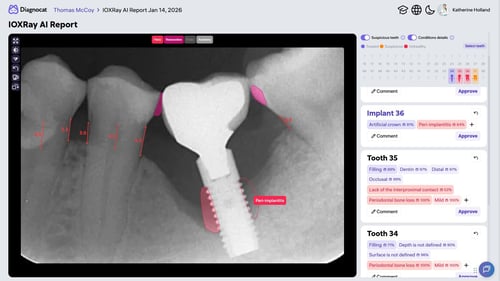
Clearer periodontal bone loss insights in the Tooth Card
We’ve improved how periodontal bone loss–related conditions are displayed in the Tooth Card. Diagnocat now presents clearer, more detailed parameters that reflect both the type and severity of the condition.
To reduce confusion and make results easier to interpret, the system automatically highlights the most pronounced value detected by the model with a confidence level above 50%.
This update supports more consistent and faster review of periodontal-related findings.
.png?width=500&height=296&name=1%20ENG%20(1).png)
-
New Last Modified column in the patient list
A new ‘Last Modified’ column has been added to the patient list, helping you quickly spot patients with recent activity.
This date updates automatically when actions such as the following occur:
- Ordering a report
- Uploading a study
- Editing a report
- Updating patient data
You can now sort and filter the patient list by modification date, making it easier to prioritize work and manage your daily workflow.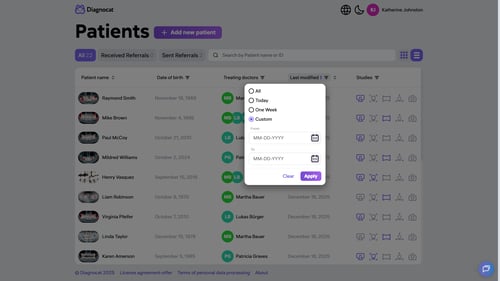
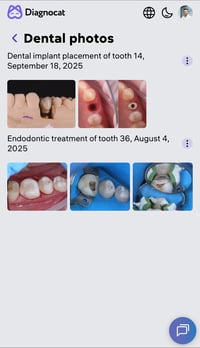
- Improved Dental Photos experience on mobile devices
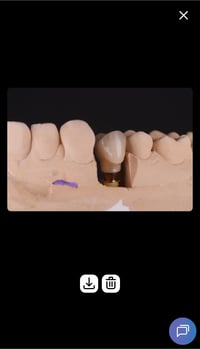
The Dental Photos module has now been optimized for smartphones and tablets.
With a new responsive design, both the widget and the image viewing page now adapt smoothly to smaller screens.
All core features remain unchanged. This update simply makes the module more comfortable and intuitive to use when working on mobile devices, whether in the clinic or on the go.
- New language support: Hebrew (RTL)
Diagnocat now supports Hebrew with a fully implemented right-to-left (RTL) interface.
All elements of the platform, including menus, buttons, input fields, and diagnostic reports are correctly displayed in RTL format, ensuring a seamless experience for Hebrew-speaking doctors.
These updates are part of our ongoing effort to make Diagnocat clearer, more efficient, and easier to use in everyday clinical workflows. - New masks are now available in the Periodontics category for panoramic and intraoral radiographs. When signs of peri-implantitis are detected, Diagnocat graphically highlights the bone loss around the implant threads.